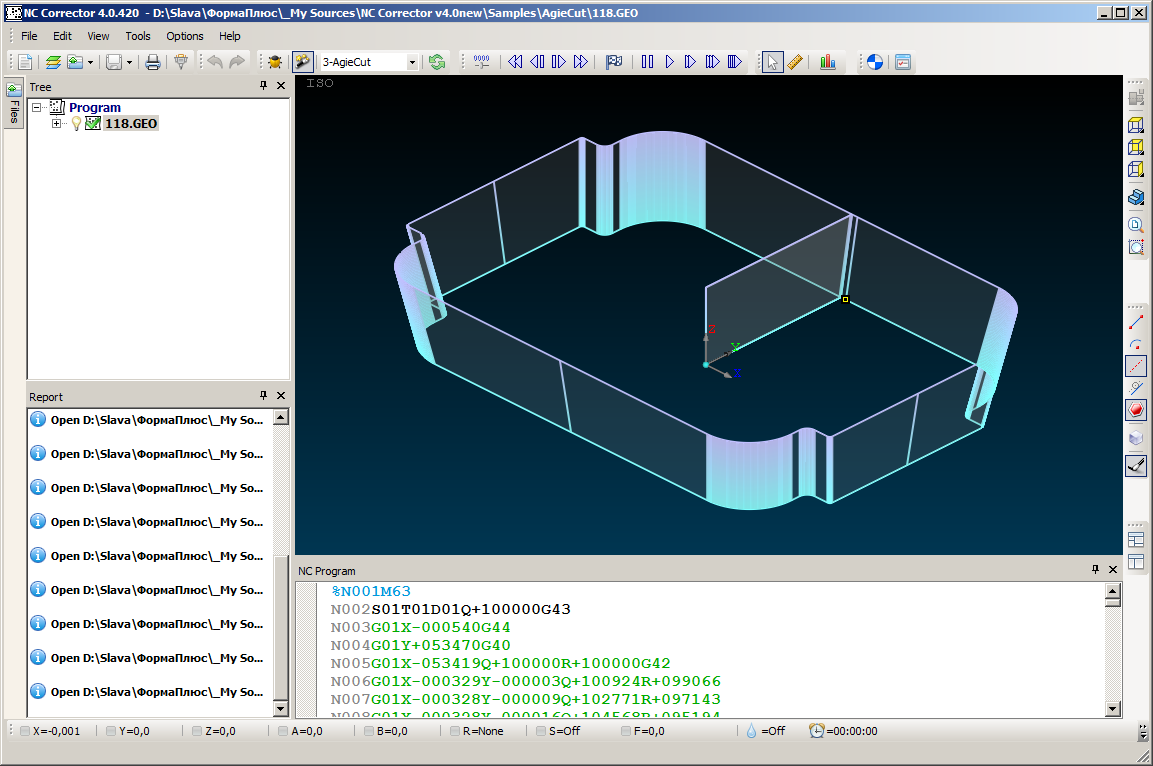
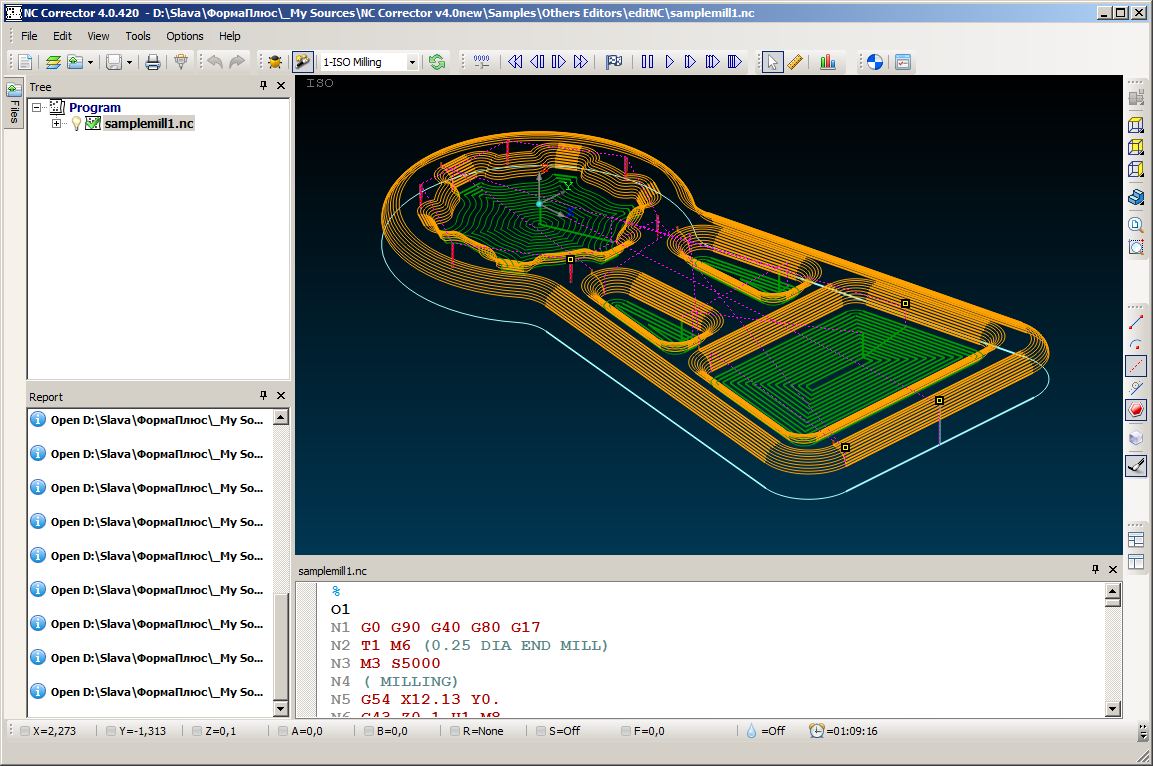
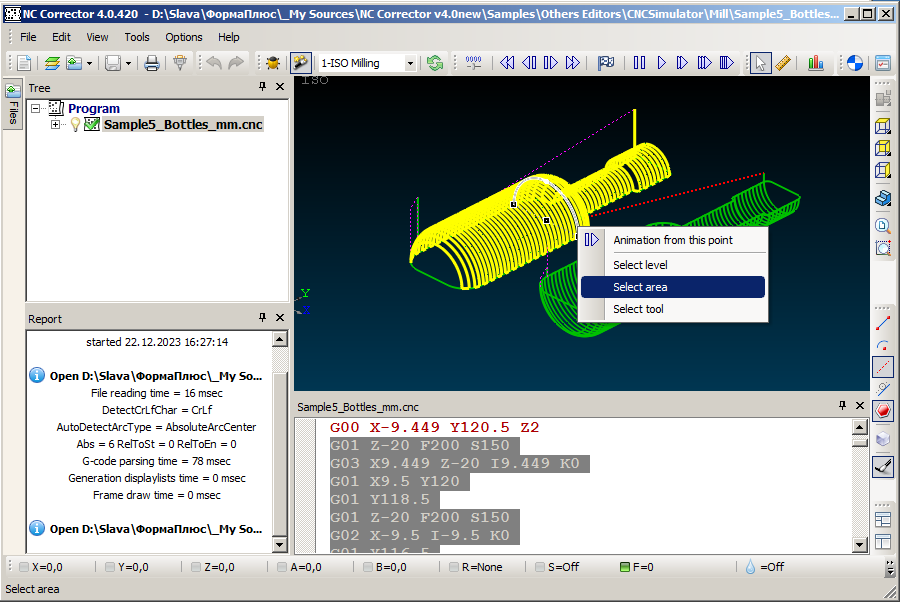
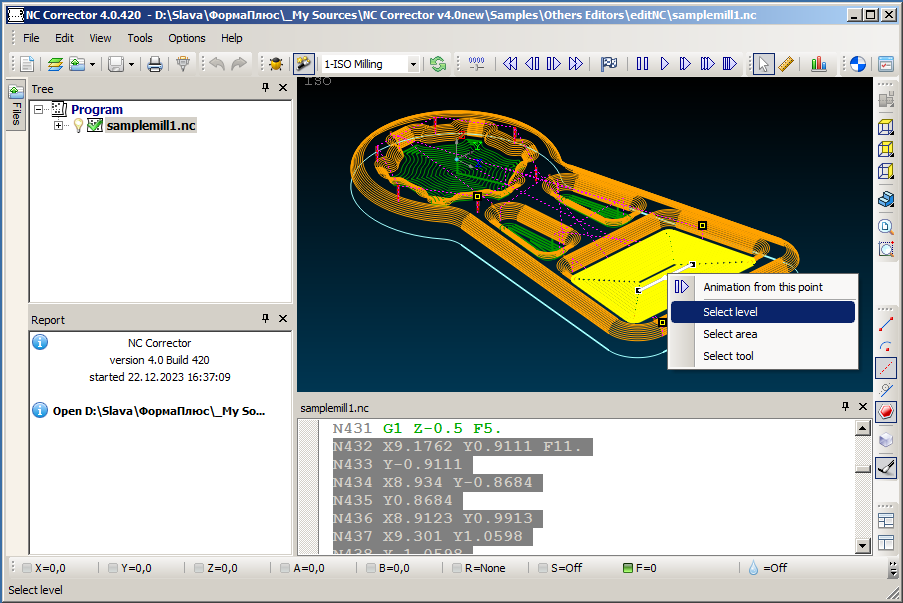
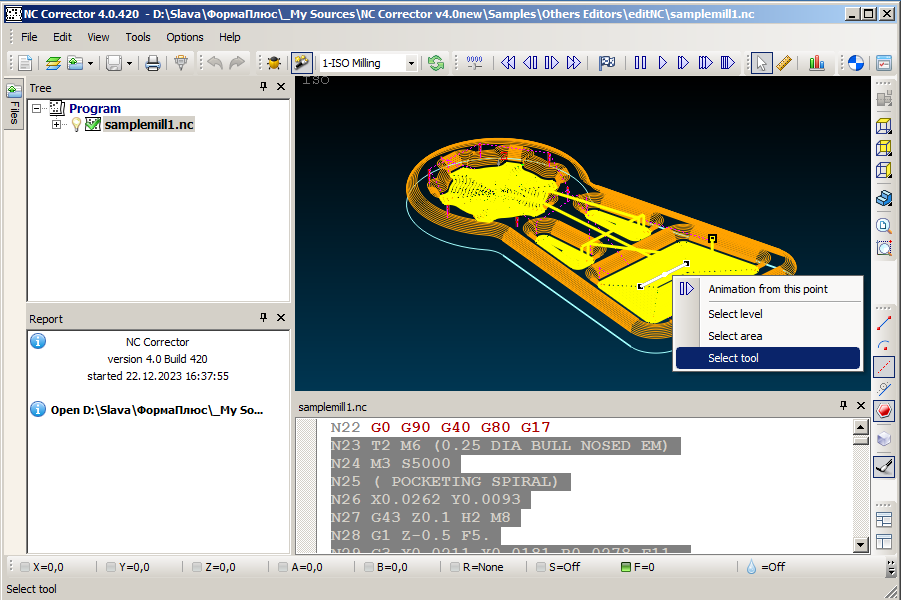
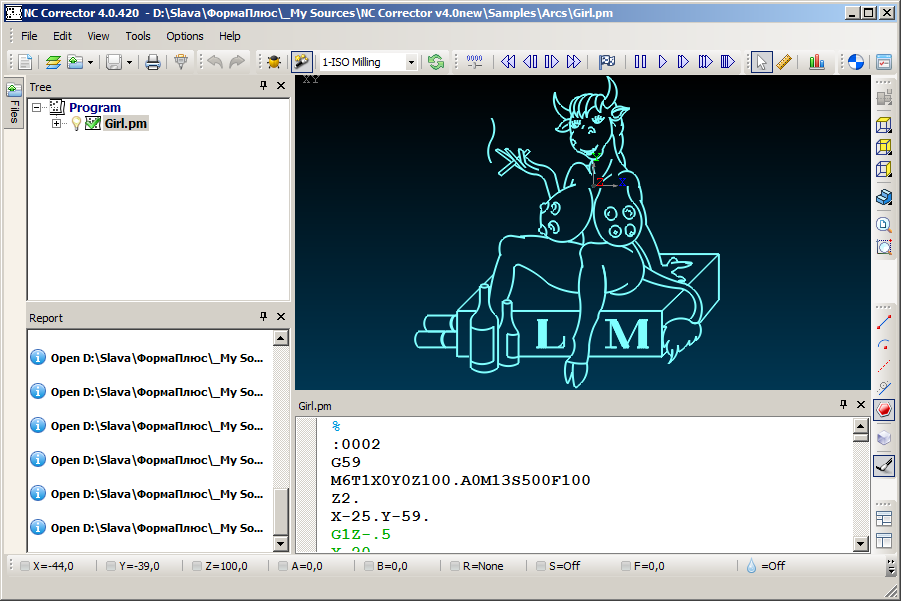
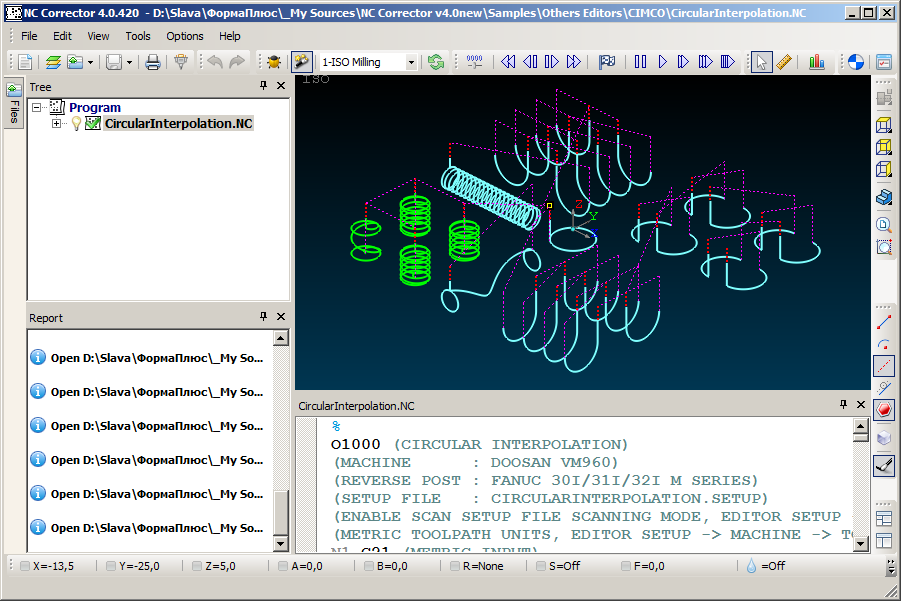
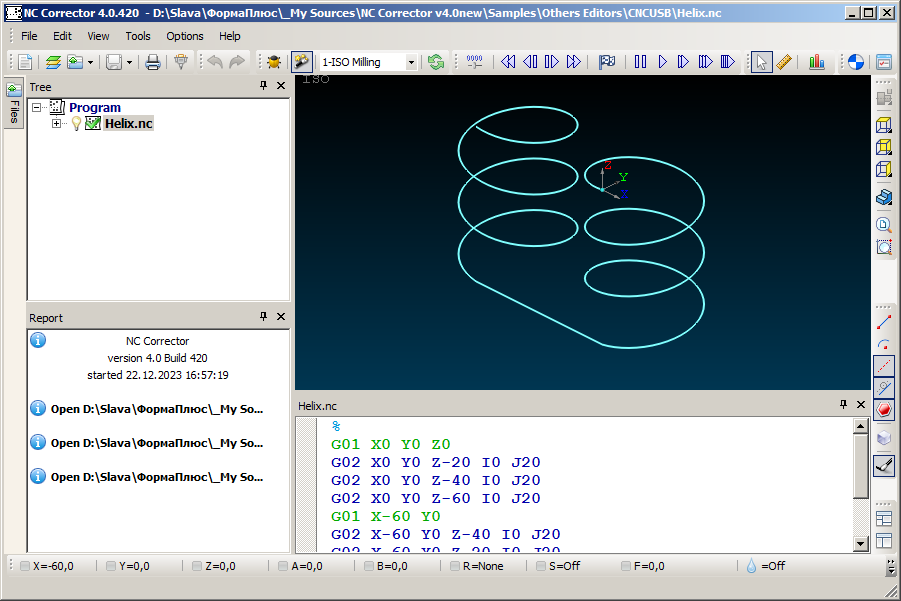
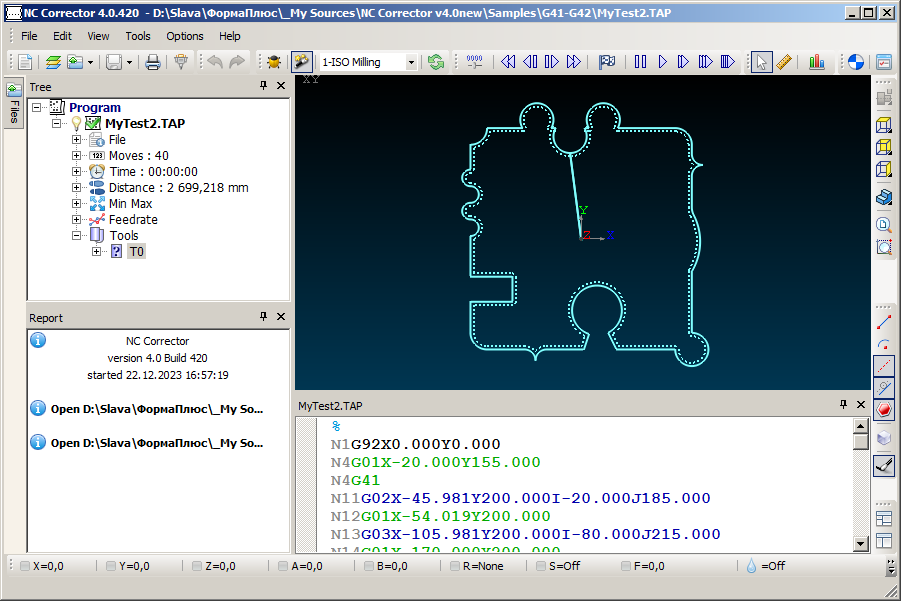
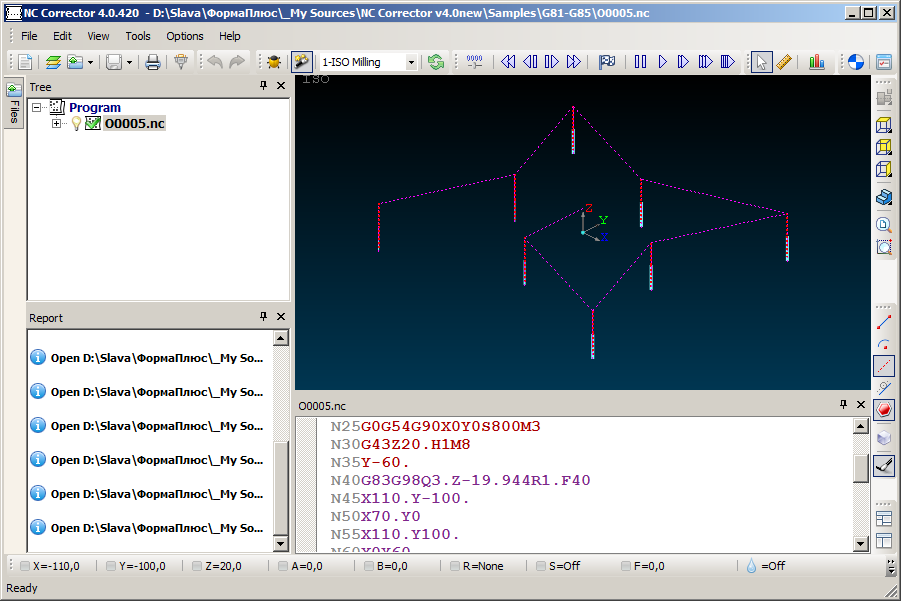
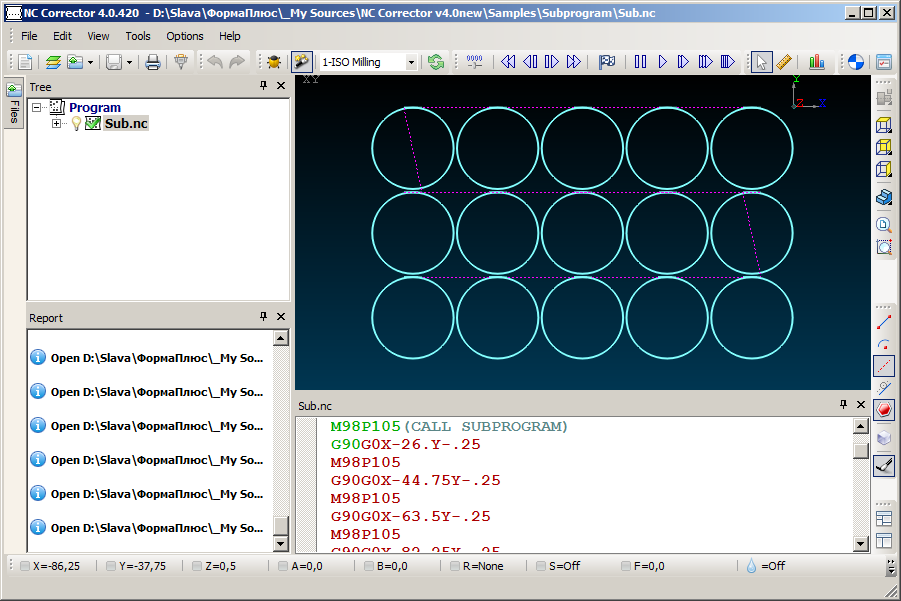
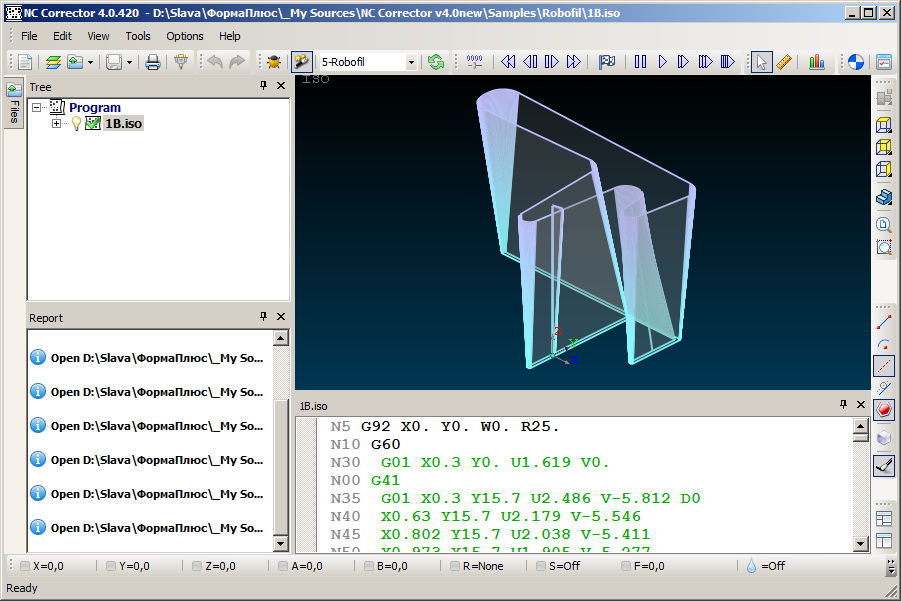
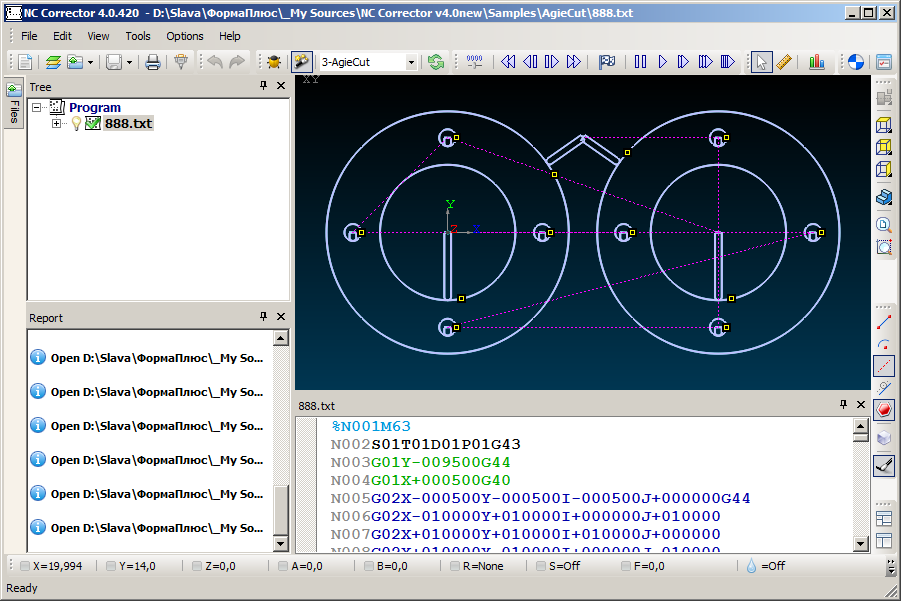
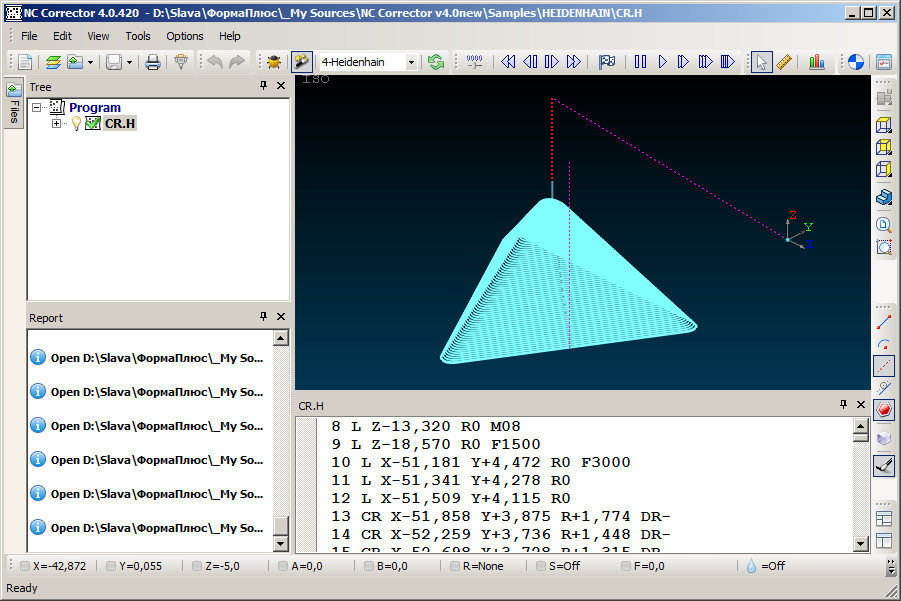
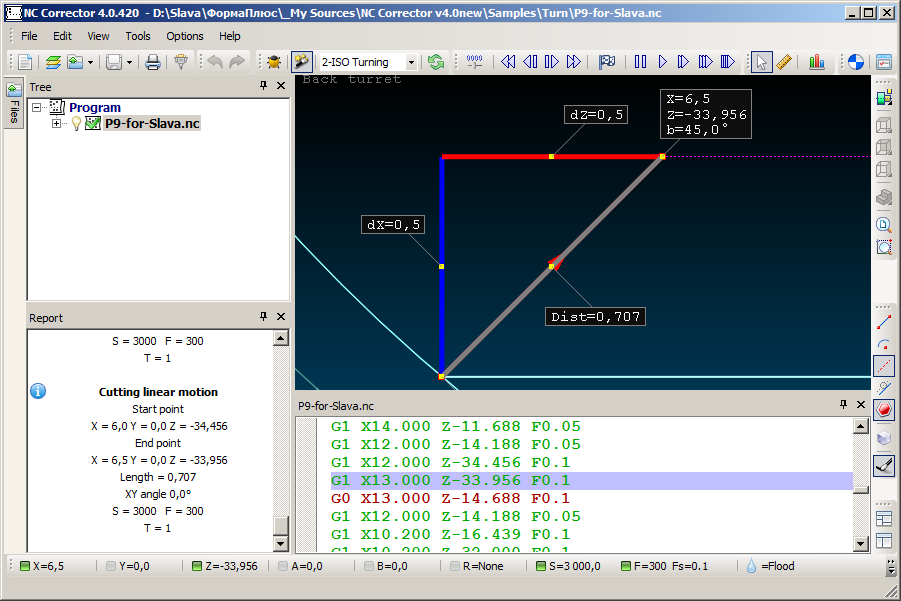
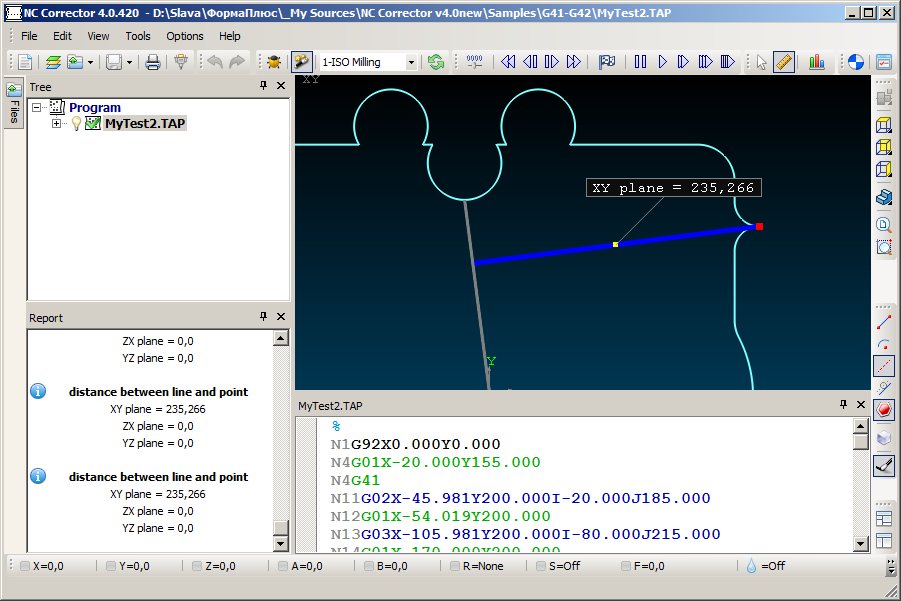
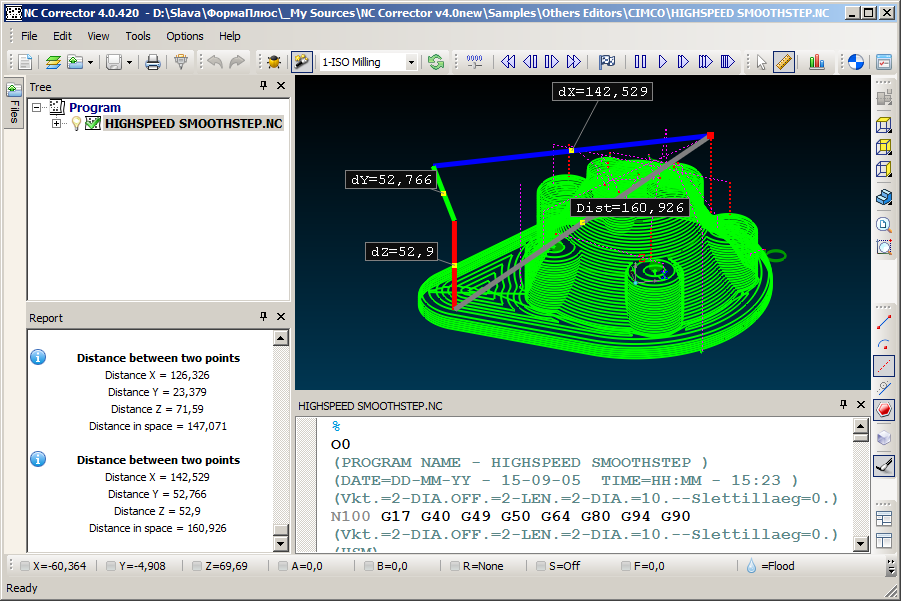
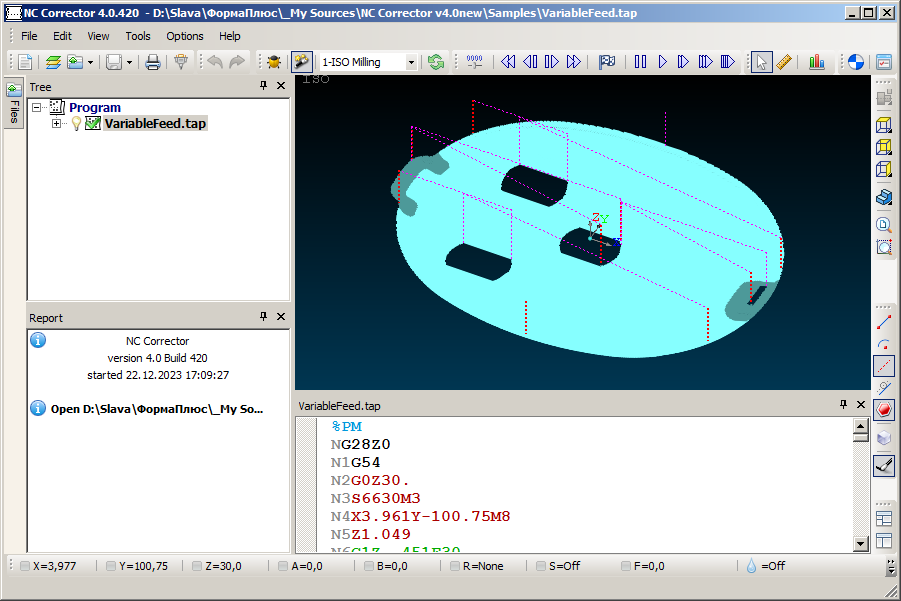
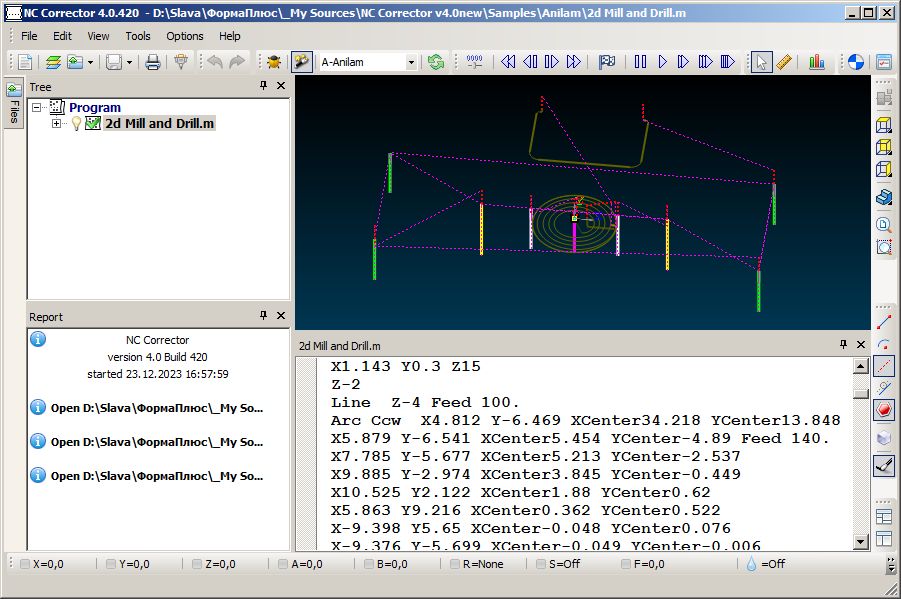
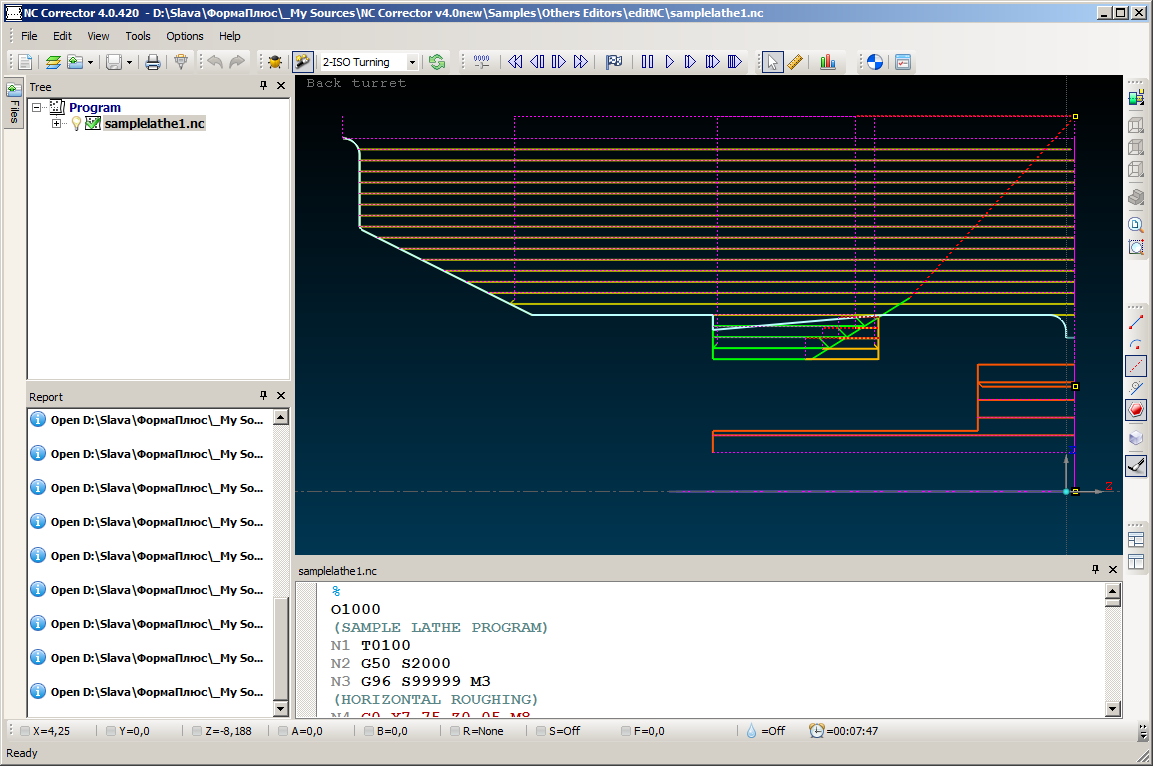
Supports CNC Milling, Lathe, WireEDM machines. Supports basic G and M functions, drilling cycles, subroutines. Automatically detects 5 types of arcs. Export to DXF, APT format. Displays information about the program in the tree. (Machine time, trajectory length, MAX MIN trajectory points, number of segments, arcs, etc.) Hint on G, M codes when hovering the mouse. Shows trajectory points, arc centers, technological stops. Displays the equidistant correction. Frame-by-frame navigation with current program parameters displayed in the status bar. Information about an element when you click on it in the graphics window. Powerful measurement engine and much more.
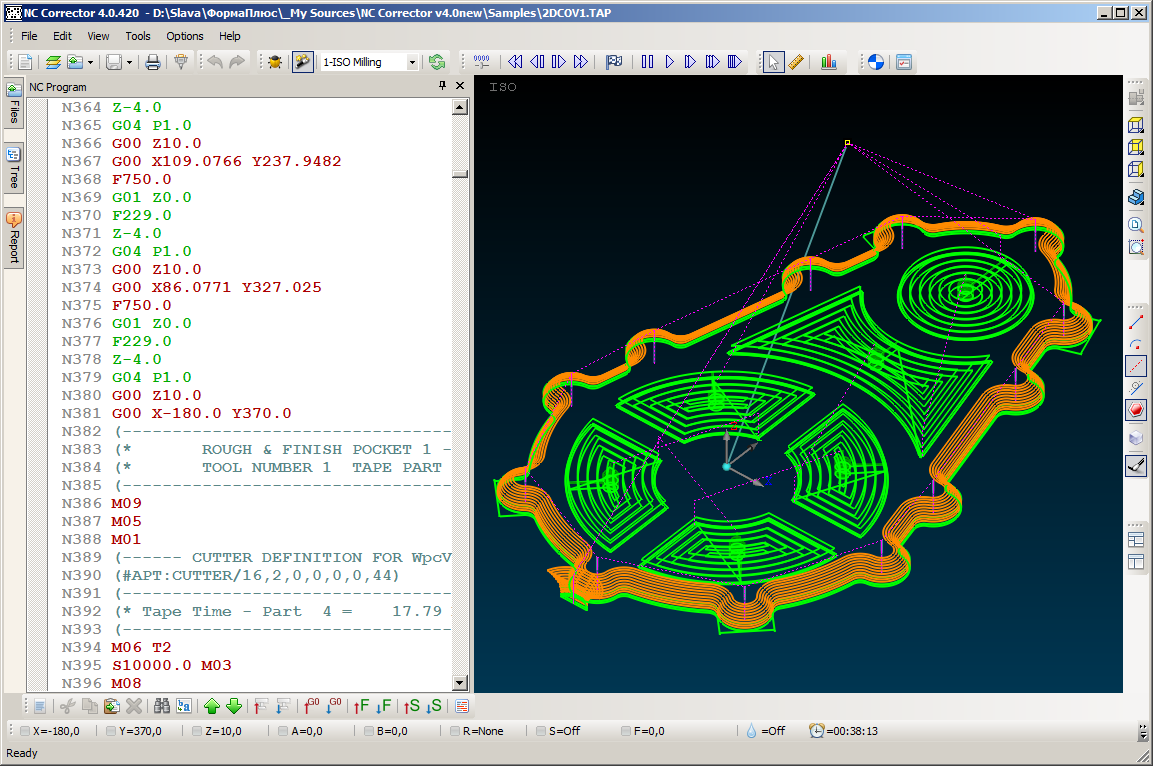
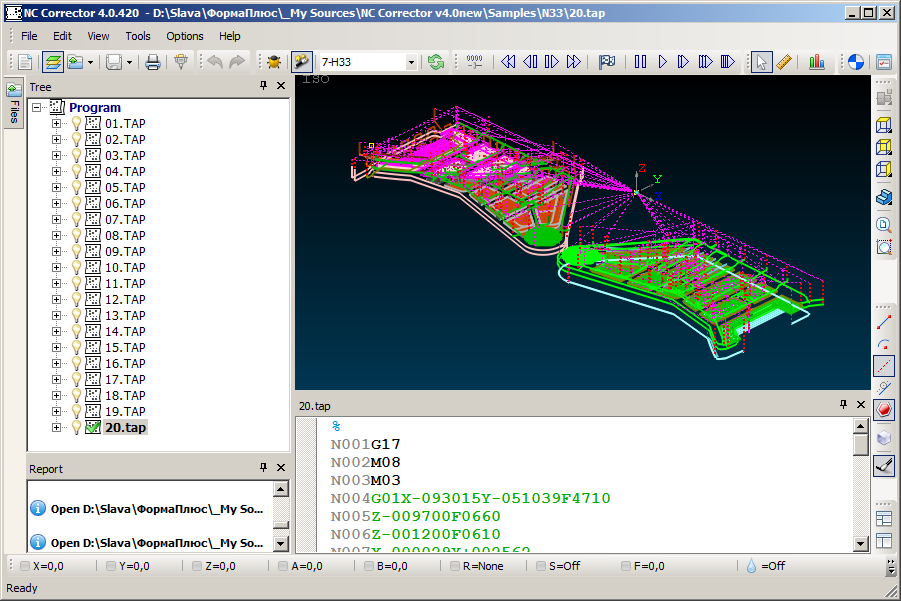
Rendering up to 100 nc-programs simultaneously, with the ability to switch, edit, use all tools, measure.
G-code files can be virtually unlimited in size. The file size is limited only by the hardware resources of your computer.
Dynamic rotation, scaling. Dynamic highlighting of the element under the cursor. Hardware graphics acceleration on OpenGL.
Small size and quick launch of the program.
Windows 95, 98, Me, 2000, XP, 7, 8, 10 compatible.
Fast loading, parsing, rendering of G-code files.
Synchronization of text and graphics windows.
Powerful measurement tool, with dimensions displayed in the graphic window and in the protocol.
A set of standard tools. Working with line numbers, feeds, spaces, comments, etc.
Milling, turning, WireEDM machines. Flexible program settings and machine parameters.
Advanced navigation. Scroll in any direction. Animation with conditional stop.
Customizable user interface. The changes are saved. Reset to original settings.
A tree with the ability to manage downloaded files and display basic information about the G-code file.
Export to DXF and APT format.
I can guide you through creating a feature or a configuration that specifically focuses on optimizing or modifying the behavior of a catalyst in a reaction, similar to those seen in chemical or petrochemical processes, but for the purpose of this exercise, let's think of it in terms of a hypothetical or generic process that could be related to software, data analysis, or another field where "catalyst" might metaphorically apply.
class EdgeDetector: def detect_edge(self, system_data): # Placeholder for edge detection logic return np.array([1, 0, 1]) # Example output mirrorsedgecatalystcrackonlycpy verified
class Catalyst: def __init__(self, properties): self.properties = properties I can guide you through creating a feature
def run(self, conditions): edge = self.edge_detector.detect_edge(conditions) catalyst_response = self.catalyst.model_behavior(conditions) # Apply mirrored configuration and crack only mode return catalyst_response * edge properties): self.properties = properties def run(self
def model_behavior(self, conditions): # Simplified model for demonstration return np.array([condition * prop for condition, prop in zip(conditions, self.properties)])
class MirroredEdgeCatalystCrackOnly: def __init__(self, catalyst, edge_detector): self.catalyst = catalyst self.edge_detector = edge_detector
Download distribution package, latest build of the program.
DownloadNC-Corrector is a freeware program.
If you like the NC-Corrector, and you want to help, can do it with Paypal
Paypal for donate strunof@ukr.net
Slava Strunov
Kharkiv city, Ukraine
+38(063)-196-59-74
strunof@ukr.net
c-y-b-e-r-p-u-n-k